|
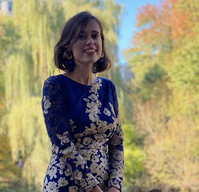
Taiwan’s first ever minister of digital affairs has transformed politics, using online platforms and AI to give power to the country’s citizens – with lessons for us all By Laura Spinney  In 2014, the approval rating of Taiwan’s government was less than 10 per cent. Popular dissatisfaction culminated in the Sunflower Movement, with students occupying legislative buildings to protest a proposed trade deal with China. Three weeks later, their demands were met. A decade on, this is seen as a turning point in Taiwanese democracy.One group to emerge from the movement was the civic technology cooperative g0v (pronounced “gov zero”), which included the well-known hacker Audrey Tang. g0v proceeded to build a virtual platform for democratic deliberation called vTaiwan. The “v” stands for “virtual”, but it could just as easily stand for “vulnerable”, says Tang. Born with a heart condition that nearly killed her as a child, she has since become the country’s first transgender minister, and she draws parallels between the fragility of her own life and that of democracy. Tang was invited to join the government in 2016 and set about implementing her vision of “radical transparency”, starting with vTaiwan. After the first covid-19 cases were declared in mainland China in late 2019, she became a central player in the Taiwanese government’s response as a cabinet member for digital affairs. By 2022, Taiwan was being universally lauded for its handling of the pandemic and Tang was given her own ministry, becoming the country’s first minister of digital affairs. In her new book, Plurality, she argues that Taiwan – often seen as a potential flashpoint for future global conflict – is now a thriving democracy that has much to teach the world. She stood down from her post in May following January’s elections, which is when we caught up with her. Laura Spinney: How has technology contributed to an erosion of democracy? Audrey Tang: Democracy depends on a citizenry being informed and engaged in the conversation, and technology that’s used to censor communication or to conduct surveillance – to make people transparent to the state rather than the other way around – has definitely hurt democracy. Even in places where there is no such top-down pressure, the sheer polarisation that exists online has harmed the discourse that is the backbone of democracy. The backslide has been quite acute in the last few decades as it has become harder for people to see democracy as something they can contribute to, or that delivers. This is a bumper year for elections globally, and some worry that democracy will take a (further) beating. Do you see it as a watershed moment? Taiwan successfully overcame the many attacks on our democracy because we had 10 years of experience working against very well-funded adversaries. We know, for example, that collaborative fact-checking inoculates people against disinformation better than looking at a checked fact. For democracies that are less well prepared than ours, yes, I do see this year as a possible watershed in terms of amplifying counter-democratic trends, if only because online discourse has become so central to democratic processes and the artificial intelligence tools that let bad actors manipulate the facts have become accessible to all. Does AI have the power to save democracy as well as erode it? Only people – the demos in democracy – can save democracy, but AI can help if it’s deployed to assist or augment collective intelligence. There are already narrow AI systems that detect online toxicity, for example, but the new generative AI, including large language models, can detect more nuance, including affinity, compassion, curiosity, reasoning and respect. If social media platforms embrace these models to foreground pro-democratic, pro-social conversations, research suggests that people will spend the same amount of time online, but they will engage in conversations that bridge, rather than exacerbate, ideological schisms. They will begin to see democracy as something they can do here and now, rather than something they only experience at election time, or that they delegate to parliamentarians.  Taiwan had a scoreboard ranking people’s preferred covid-19 vaccines REUTERS/Ann Wang In Taiwan, this starts by educating children to be digitally savvy. How is that achieved? Even before I became a minister, I was a member of the committee that advised the government on curricular reform. The overhaul took effect in 2019, and our new curriculum has now been deployed to all primary schools [ages 6 to 12]. Instead of a one-size-fits-all education, based on critical consumption of information and standardised tests, the new curriculum emphasises autonomy, interaction and the common good. Co-creation replaces literacy at the core of it. I think the results speak for themselves. Surveys show that vTaiwan now leads the world in civic education. Taiwan has been criticised because the government is free to dismiss policy proposals, and often does. How do you judge vTaiwan’s impact? vTaiwan served as a proof of concept that, using open-source technology alone, civil society can deliberate policy matters in a fully participatory way that leaves nobody behind. That is important given that 10 years ago, the administration was enjoying an approval rating of 9 per cent and people automatically distrusted anything it said or asked. To begin with, the platform addressed mainly digital issues, but it ended up delivering quite impactful policies – for the regulation of the ride-hailing company Uber, for example. And the project later broadened its scope to non-digital issues, such as consultations for the Open Parliament Action Plan [which aims to bolster democracy through transparency, openness, participation, digitisation and literacy]. vTaiwan helped rebuild legitimacy. How do the Join platform and your latest initiative, Alignment Assemblies, move things on? Join is a government-run – as opposed to a civil society-run – platform. It was launched a year after vTaiwan, and its most important function is to serve as a petition platform. Anyone who gathers 5000 signatures for a proposal can force a ministerial response. Alignment Assemblies are conversations designed to steer the development of AI in ways that benefit society. It takes on board three lessons that we learned from the implementation of vTaiwan. First, we reach out to hundreds of thousands of people via SMS from what they know to be a government number. Second, once we have chosen a representative sample of several hundred citizens, we ask them to meet online in video chat rooms with AI facilitators – something that only became possible with recent advances in conversational AI. Both those measures have massively increased inclusivity, including of senior citizens. Third, we summarise the conversation using AI. A recent Alignment Assembly on the accuracy, reliability and consistency of information led, in just a few months, to an anti-fraud act that is currently awaiting deliberation in parliament. How did your digital approach help in Taiwan’s response to the covid-19 pandemic? Around the world, polarisation over vaccines hurt many more people than was necessary, but in Taiwan there was no anti-vaccine faction. That isn’t because Taiwanese people are homogeneous, it’s because we turned the conversation into a “my vaccine is better than your vaccine” race. We had a national online scoreboard where we kept track of people’s preferences for four vaccines by age bracket. It became a friendly competition, as between rival sports teams. The idea, then and now, is to anticipate a conspiracy theory and prebunk it, instead of trying to debunk it after the fact when it might be too late. Prebunking works like inoculation: a weaker virus takes hold so a more potent one can’t. We applied the same strategy before the general elections in January to scotch the conspiracy theory that they would be rigged.  A decade ago, dissatisfaction with Taiwan’s government spawned the Sunflower Movement
REUTERS/Toby Chang Did digital democracy have a positive impact on those elections? Definitely. After the election, hate across party lines reached a historic low, and that’s despite Taiwan being the most targeted place in the world for disinformation and interference aimed at increasing polarisation. We have playbooks against such interference, including collaborative fact-checking and prebunking of conspiracy theories, so that it backfires and actually increases solidarity across Taiwanese people. The upshot is that, after the election, all three parties and their supporters feel that they have won a little bit. Our radically transparent approach to ballot-counting helped too: votes, which were on paper, were read out in front of observers with cameras. Have other countries asked for your help in introducing digital democracy? Very much so. I’m about to leave for a book tour in Europe, where I’ll meet my counterparts in European governments as well as civic society groups. I’ll spend a few days in Finland, which is one of the few countries in Europe to use the collaborative sense-making tool Polis for national consultation, as vTaiwan does. Digital ministers form an assembly of sorts, with experimental platforms all around the world, including Policy Lab in the UK and sitra in Finland. Taiwan has a very high level of digital inclusivity. Could these processes work in other countries? From 2016, we insisted that mobile broadband was a human right and the penetration rate of that alone was more than 80 per cent in 2022 – up from 67 per cent six years earlier. That’s even before you consider fixed broadband. We are one of the top countries in the world when it comes to internet inclusivity. But yes, what we have done is absolutely feasible in other countries. The point is that we bring technology to where people are. We’re not asking them to adapt to the technology – and offline options remain available. Accessibility is our top priority. As a hacker-turned-minister, someone who has tried to renew democracy from the inside, is your ultimate goal to bring down the existing system? I’m a Taoist, meaning that I don’t think in terms of bringing things down. I prefer Richard Buckminster Fuller’s metaphor in which an individual affects society like a trim tab – the tiny rudder that steers the actual rudder that steers the ocean liner. I don’t steer, I nudge. I want to persuade people to think of democracy as a social technology and to invent new ways of living together. The documentary Good Enough Ancestor, which is based on my book and my life, makes it clear that for me, it isn’t about trying to solve everything or closing down possibilities. It’s about opening them up for future generations, who will have different challenges and different tools, and harnessing diversity through co-creation. The same word in Taiwanese means “digital” and “plural”. I always thought of myself as both digital minister and minister of plural affairs. Laura Spinney is a writer based in Paris, France
0 Comments
 It would be a “diplomatic” solution to the conflict over sovereignty, says David Michaels, a British political and economic strategist.
The president of Argentina Javier Milei reiterated his intention to discuss the possession of the Falkland Islands (Malvinas) with Great Britain, but in an “adult” negotiation without urgency. “There is no instant solution,” he said in an interview with the BBC broadcast on Monday the 6th. (May) In parallel to those messages involved in that dispute, some ideas have emerged. Inviting the islands to become associate members of Mercosur would be a step towards a “diplomatic” solution to the Falkland/Malvinas dilemma that could, simultaneously, ensure a peaceful “economic” remedy and dispel any future thoughts of aggressive acts, proposes David Michaels, a British political and economic strategist. Although Mercosur does not formally recognize this territory as a sovereign country, a solution could be created if Mercosur members recognized the regional economic benefits and merits of the initiative, he stated in an article at the end of April on the EIN Presswire portal. A central element of their proposal is the creation of a “Malvinas/Falkland Islands Development Fund” that would go towards greater exploitation of the islands' natural resources. Las Malvinas/Falkland would be the main managing partner of the fund. To solve this, the Inter-American Development Bank, the International Development Finance Corporation of the United States and other regional and international banking entities – including the central banks of the Mercosur countries – could be invited to subscribe to a minority percentage. The capital market could also be appealed to, via a consortium of Anglo-Argentine brokers, which would guarantee diverse and robust financial support, says Michaels. Furthermore, this initiative could be a catalyst to attract foreign investment capital to the entire South American Southern Cone. The text includes the comment of a senior official in the United States Department of State: “The creation of an investment fund could provide the parties with a win-win situation, in which everyone saves face, and thus begin a long and fruitful collaboration.” And he quotes a “very respected” Uruguayan foreign minister, who he does not identify: “Exploring a cooperation agreement between Mercosur and the islanders can be a first step in the right direction” and an “excellent instrument to build a civilized dialogue” between the islanders and Argentina. The consultant, head of David P. Michaels Strategic Solutions, based in New York, was in Uruguay in April. When consulted by Search, he defined his proposal as “an economic initiative aimed at starting talks so that they can lead to a different type of solution” for the Falkland/Malvinas. In 2021, Mercosur expressed its support for Argentina's claim to sovereignty over the Malvinas. The consultant understands that his proposal “is a way to achieve what Milei has said. Currently, no talks are taking place. This initiative could boost them” and “lead to a different type of solution.” He added: “Milei's goal is the economy and improving relations with the United States and the United Kingdom. It needs to bring foreign investment to Argentina and opportunities for its citizens. Capital is needed to create a better quality of life for Argentines, not short-sighted distractions and conflicts” that take focus away from the goal of solid economic development. According to Michaels, the benefit to the British would be “a peaceful and economically viable alternative to confrontation.” This, he maintains, can also be an “important step in the Mercosur-UK talks.” David P. Michaels advises corporations and governmental entities on matters associated with conflict resolution, economic restructuring, and related political, financial, and economic negotiations. Notably, he is credited with anticipating the concepts behind the Brady Plan and the Enterprise for the Americas programs launched by the Bush (senior) Administration. During the 1980s sovereign debt crisis, he was the principal proposer of the “International Central Clearing House” for the registration of public and private sector debt instruments. David Michaels served as the President of the Foreign Press Association in the United States (founded in 1918) from 2014-2019. It’s the Donald Trump trial made for the tabloids – accused of an affair with an adult film actress and a payment allegedly made to cover it up ahead of the 2016 United States election. Eight years later, Trump is seeking the presidency again. What’s the impact of the scandal this time? In this episode: Kristen Saloomey (@KSaloomey), Al Jazeera Correspondent This episode was produced by Ashish Malhotra, Sarí el-Khalili and Zaina Badr, with Manahil Naveed, Marcos Bartolomé and our host Malika Bilal. Our sound designer is Alex Roldan. Our lead of audience development and engagement is Aya Elmileik and Adam Abou-Gad is our engagement producer. Alexandra Locke is The Take’s executive producer. Ney Alvarez is Al Jazeera’s head of audio. 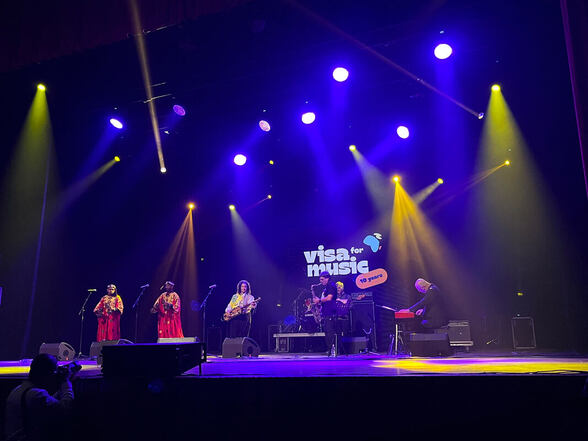 From FPA Board Member Emilie Pons
artists, along with a few other Gnawi, performed at the Mohammed V Theater stage on November 23rd. Their show was one of the 60+ concerts featured at the 10th edition of the Visa for Music festival. Artists from countries as varied as Ouganda, Congo, Egypt, Mauritania, Bahrein, Burkina Faso, Algeria, Ethiopia, Tanzania, Nigeria, Lebanon, South Africa, Camreoun, Iran and Cape Verde performed in the center of the Moroccan capital.
Every year, Morocco never fails to impress with its commitment to culture from the Kingdom as well as from outside the Kingdom. The Marrakech International Film Festival just ended, and earlier this year, the Gnawa and world music festival attracted local and international crowds to Essaouira. Visa for Music is another international festival which brings together talents and promoters who work in a multitude of languages and dialects. For Mauritanian vocalist and activist Ziza Youssouf, who performed this year, Visa for Music is “a symbol of humanity” where “sensitive souls” get to meet. “We need these types of meetings,” he explains. “If all countries were given an opportunity to meet, there wouldn’t be any fear. We cannot create alliances within fear. And if countries meet on a regular basis, there will be a strong energy.” Brahim el Mazned, the founder and director of Visa for Music, should be named “representative of sensitive souls in Morocco,” Youssouf adds. Youssouf believes that a festival like Visa for Music helps young people understand their values and make the most of them. It can also create ambassadors and strong actors of social causes, as well as spokespersons for youth and women, he says. The venues, with places such as the Mohammed V Theater, the Bahini venue, or the Renaissance stage, were as varied as the genres: from rock to rap to electronic music to traditional Moroccan music, everything was at the Visa for Music rendez-vous. The festival featured panels about underrepresented cultures and their integration into the music industry, but also about promoting the African musical heritage, or again African contributions to jazz. The festival also organized after parties at the hotel bars Onomo and the Marriott. Visa for a Music is a bridge between African and Northern markets, and it provides exposure to African and Middle Eastern performers. Music festivals bring together talents from different parts of the world, but they also create conversations between the host city or host country of the festival and all its guests.
 .To read a review from our President, Ian Williams, of the book Western Sahara: War, Nationalism and Conflict Irresolution, Second Edition, CLICK HERE.
 The already highly acclaimed “50 Years of Hip Hop Style” exhibition will open at the FIT Museum on February 8th.
As part of the event, the FIT is holding a Hip Hop Symposium which is free of charge. It takes place on February 24th from 10am to 5pm. Free Tickets, which are necessary, are available here on a first come first serve basis. The Beyond Earth Institute Presents: Paving the “Rules of the Road” toward Space Migration1/27/2023 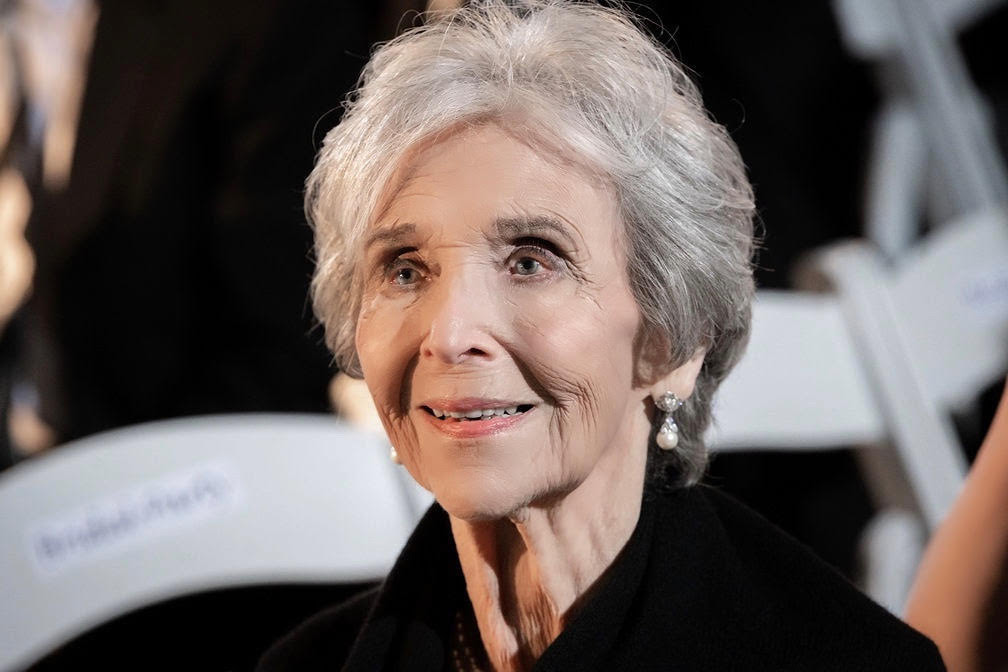 THURSDAY, FEBRUARY 16, 2023, 1:00PM - 2:15PM EST
The Beyond Earth Institute (Beyond Earth) will be hosting a virtual policy event titled “Paving the ‘Rules of the Road’ toward Space Migration” on February 16, 2023 from 1:00-2:15 pm Eastern Time via Zoom. The event is free with donations suggested. The upcoming chapter of the 21st Century "Space Age" will be transformative for the future of the United States - and humanity. With it, a new of thinking about developing, as well as living in, space is emerging. The commercialization and democratization of space is leading focus away from exclusively government-led “aspirational” programs in favor of “practical, tangible, equitable” projects driven and fueled by the private sector. Recognizing this shift, the Beyond Earth Institute believes that the U.S. Government should frame its audacious goal of returning to the Moon and establishing a permanent human presence not as the narrow technocratic goals of a federal bureaucracy - but as part of America’s historic commitment to pioneering and settling new frontiers. To that end, the Beyond Earth Institute has produced a report, “Emerging Space Industrial Ecosystem Leading to Eventual Beyond Earth Migration,” that recommends a shift in the fundamental role of government in space. Rather than being the "leader" of the private sector, dictating development, operation, and ownership of space activities, the government should be the "lead stimulator" of such activities. It should "set the rules of the road," rather than "owning it" - by promoting and encouraging off-planet expansion, providing security, and, most importantly, being a customer, not a competitor, for off-planet goods and services. Join the Beyond Earth Institute's Courtney Stadd and Robert Brumley, both prominent long-term advocates of effective commercial space policy and the co-authors of the report, for a conversation with other thought leaders on the report's observations, findings, and recommendations - and a discussion on the implications of the emerging space industrial base on humanity's eventual migration Beyond Earth. Brumley will share his latest thinking on how we can begin the process of converting policy to programs. |

- Home
-
About Us
- FPA MEMBERSHIP
- FOREIGN PRESS Foundation
- News
-
BRIEFINGS
- The Mysteries of the Political Shifts in Europe
- The Foreign Press & The Trump Trial: Takeaways from the Frontline
- Can the UN Be Rescued from Irrelevance? Lessons from Kofi Annan
- The Caucasus Emulates the Balkans?
- Artificial Intelligence in Healthcare
- Haiti's Kids Face Famine
- Putin Won: What Does This Mean for Russia's Neighbors?
- WAYS TO SUPPORT
- Contact