
What’s the Endgame on Trump's Board of Peace?with Stephen Schlesinger and Craig Mokhiber
In this episode of the Foreign Press Association's "Outside-In Scoop" podcast, FPA President Ian Williams is joined by Stephen Schlesinger, American historian, political commentator and international affairs specialist, and Craig Mokhiber, longtime human rights lawyer and former UN official, for an in-depth discussion on Donald Trump’s proposed “Board for Peace,” Gaza, and the future of international law.
The panel examines the origins of Trump’s Board for Peace, its passage through the UN Security Council, and its implications for Gaza, Palestine, the United Nations, and global governance. Drawing on decades of experience inside the UN system, Schlesinger and Mokhiber analyze whether the initiative represents a legitimate peace mechanism or a dangerous erosion of international law and UN authority.
Stephen Schlesinger is a Fellow at the Century Foundation in New York City. He is the former Director of the World Policy Institute at the New School (1997-2006) and former publisher of the quarterly magazine, The World Policy Journal.
Craig Mokhiber is an international human rights lawyer and activist and a former senior United Nations human rights official. A human rights activist in the 1980s, he would go on to serve for more than three decades at the United Nations, with postings in Switzerland, Palestine, Afghanistan, and UN Headquarters in New York, undertaking dozens of human rights missions to countries across Africa, Asia, the Middle East, Eastern Europe, and Latin America.
Is Trump Swapping Venezuela’s Freedom for60 Million Barrels of Oil?With Diego Arria
In this in-depth interview, Ian Williams, President of the Foreign Press Association, speaks with Venezuelan opposition figure Diego Arria about the dramatic political developments following the removal of Nicolás Maduro and the growing role of Donald Trump in Venezuela’s future. The conversation explores whether U.S. intervention represents liberation or a new form of control, as concerns mount over oil interests, political prisoners, and the erosion of international law.
They cover U.S. sanctions, alleged narco-terrorism links, the Venezuelan military, political repression, and fears that Maduro’s inner circle remains in power under a new arrangement. Diego warns that despite Maduro’s removal, over 1,000 political prisoners remain jailed, dissent inside Venezuela is still punished, and U.S. policy appears focused more on oil access than democracy or human rights.
Diego Arria on Venezuela, Intervention, and the Limits of Sovereignty
There are echoes of Kosovo in what is unfolding in Venezuela — raising profound questions of legality, sovereignty, and responsibility. As with the capture of Saddam Hussein, it risks becoming the lynching of a guilty man: morally satisfying to some, but legally and politically perilous.
To explore these issues, the day of the US raid, I spoke with Ambassador Diego Arria, Venezuela’s former ambassador to the United Nations and a former president of the UN Security Council during the Balkan wars who was, like many Venezuelans happy to see Maduro gone, but apprehensive about Trump’s intentions.
As Venezuela’s ambassador in the UN Security Council Arria played a significant role in shaping what Kofi Annan later formalized as the Responsibility to Protect and left his mark with the “The Arria Formula” meetings of the Security Council, designed to discuss larger issues. A progressive reformist, former governor of Caracas, and longtime opponent of authoritarianism, Arria is no reactionary outsider to Venezuelan politics although he has been exiled from home for some years and has in fact recently moved from New York to Miami to be closer to the action. He has remained deeply engaged in the opposition all this time.
What Actually Happened?

The hacker turned politician using digital tech to reimagine democracy
“Taiwan’s first ever minister of digital affairs has transformed politics, using online platforms and AI to give power to the country’s citizens – with lessons for us all.”
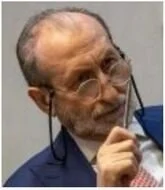
Interview with David Michaels
“Inviting the islands to become associate members of Mercosur would be a step towards a “diplomatic” solution to the Falkland/Malvinas dilemma that could, simultaneously, ensure a peaceful “economic” remedy and dispel any future thoughts of aggressive acts, proposes David Michaels, a British political and economic strategist.”