
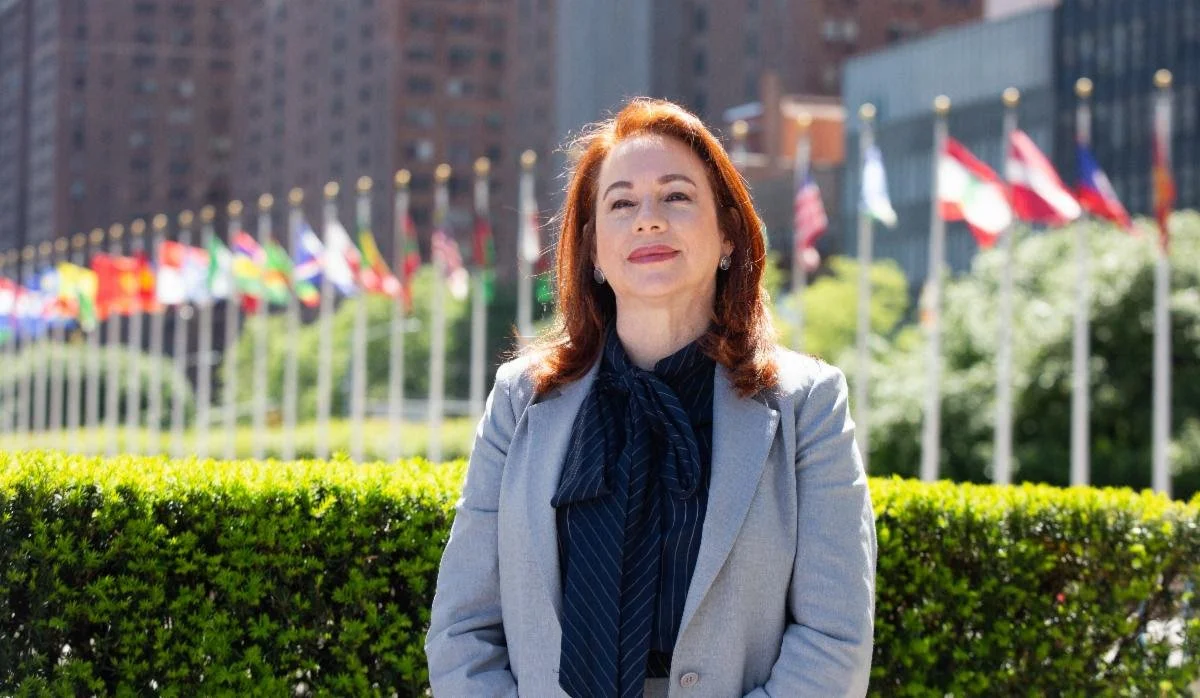
FPA Media Briefing with UN SG CandidateMaria Fernanda Espinosa Garces
The FPA hosted UN Secretary General candidate Maria Fernanda Espinosa Garces, who in conversation with FPA President Ian Williams discussed the difficulties of being a candidate in (s)election where five bickering powers can veto anyone suspected of having their own mind!
She discussed the need to reform the UN - but acknowledged that “reform” means different things to different governments. She emphasized the indispensable work that the UN does, but stressed the need for the SG’s more active diplomacy to avert or solve problems as well the need for more effective communications.
The Big, Beautiful Game: Will FIFA’s World Cup live up?
Whether you are covering the matches or just enjoying them - you are invited to a quarter-final watch party at the Natural History Museum. This event will include food and drink and access to the museum’s current World Cup, World Cultures exhibit - FREE for FPA members - please make sure your membership is up to date and join us! Stay tuned for more information in the coming weeks.
FPA Statement on the Jailing of Journalists in Hong Kong
The Foreign Press Association has had a long and productive relationship with our colleagues in Hong Kong. We were alerted to the worsening position of the media when we approached former speakers and they said they were unable to for fear of the consequences.
We deplore the real, harsh sentences imposed for the invented “crimes” of Jimmy Lai and his colleagues. Their “crimes” were behaving as normal journalists and they should not have been charged and tried, let alone sentenced. We call for their immediate release.
FPA Statement on the Arrest of Journalist Don Lemon
The FPA deplores the arrest of Don Lemon for reporting a demonstration inside a Minnesota church. It is a threat to the First Amendment rights of all residents in America and but adds a further chilling effect for foreign press journalists whose visa status is already under highly critical scrutiny. If a journalist well-known to an American audience can be arrested, then a reporter working for an audience outside the United States has every reason to expect consequences.
Many of our members, rushed downtown in Manhattan to the World Trade Center to report on 9-11 and its aftermath, and following this logic could have been charged with complicity in the attacks!
Is Trump Swapping Venezuela’s Freedom for60 Million Barrels of Oil?With Diego Arria
In this in-depth interview, Ian Williams, President of the Foreign Press Association, speaks with Venezuelan opposition figure Diego Arria about the dramatic political developments following the removal of Nicolás Maduro and the growing role of Donald Trump in Venezuela’s future. The conversation explores whether U.S. intervention represents liberation or a new form of control, as concerns mount over oil interests, political prisoners, and the erosion of international law.
They cover U.S. sanctions, alleged narco-terrorism links, the Venezuelan military, political repression, and fears that Maduro’s inner circle remains in power under a new arrangement. Diego warns that despite Maduro’s removal, over 1,000 political prisoners remain jailed, dissent inside Venezuela is still punished, and U.S. policy appears focused more on oil access than democracy or human rights.
Syngenta, Monsanto, Weedkiller,Parkinson's and the Presswith Carey Gillam
Carey Gillam on what journalists should look at in toxic whitewash!
Carey Gillam is an American investigative journalist and author with more than 30 years of experience covering food and agricultural policies and practices, including 17 years as a senior correspondent for Reuters international news service (1998-2015). She has specialty knowledge about the health and environmental impacts of pervasive pesticide use and industrial agriculture, and has won several industry awards for her work. Her first book, “Whitewash: The Story of a Weed Killer, Cancer and the Corruption of Science,” was released in October 2017 and won the coveted Rachel Carson Book Award from the Society of Environmental Journalists as well as two other awards.
Diego Arria on Venezuela, Intervention, and the Limits of Sovereignty
There are echoes of Kosovo in what is unfolding in Venezuela — raising profound questions of legality, sovereignty, and responsibility. As with the capture of Saddam Hussein, it risks becoming the lynching of a guilty man: morally satisfying to some, but legally and politically perilous.
To explore these issues, the day of the US raid, I spoke with Ambassador Diego Arria, Venezuela’s former ambassador to the United Nations and a former president of the UN Security Council during the Balkan wars who was, like many Venezuelans happy to see Maduro gone, but apprehensive about Trump’s intentions.
As Venezuela’s ambassador in the UN Security Council Arria played a significant role in shaping what Kofi Annan later formalized as the Responsibility to Protect and left his mark with the “The Arria Formula” meetings of the Security Council, designed to discuss larger issues. A progressive reformist, former governor of Caracas, and longtime opponent of authoritarianism, Arria is no reactionary outsider to Venezuelan politics although he has been exiled from home for some years and has in fact recently moved from New York to Miami to be closer to the action. He has remained deeply engaged in the opposition all this time.
What Actually Happened?